
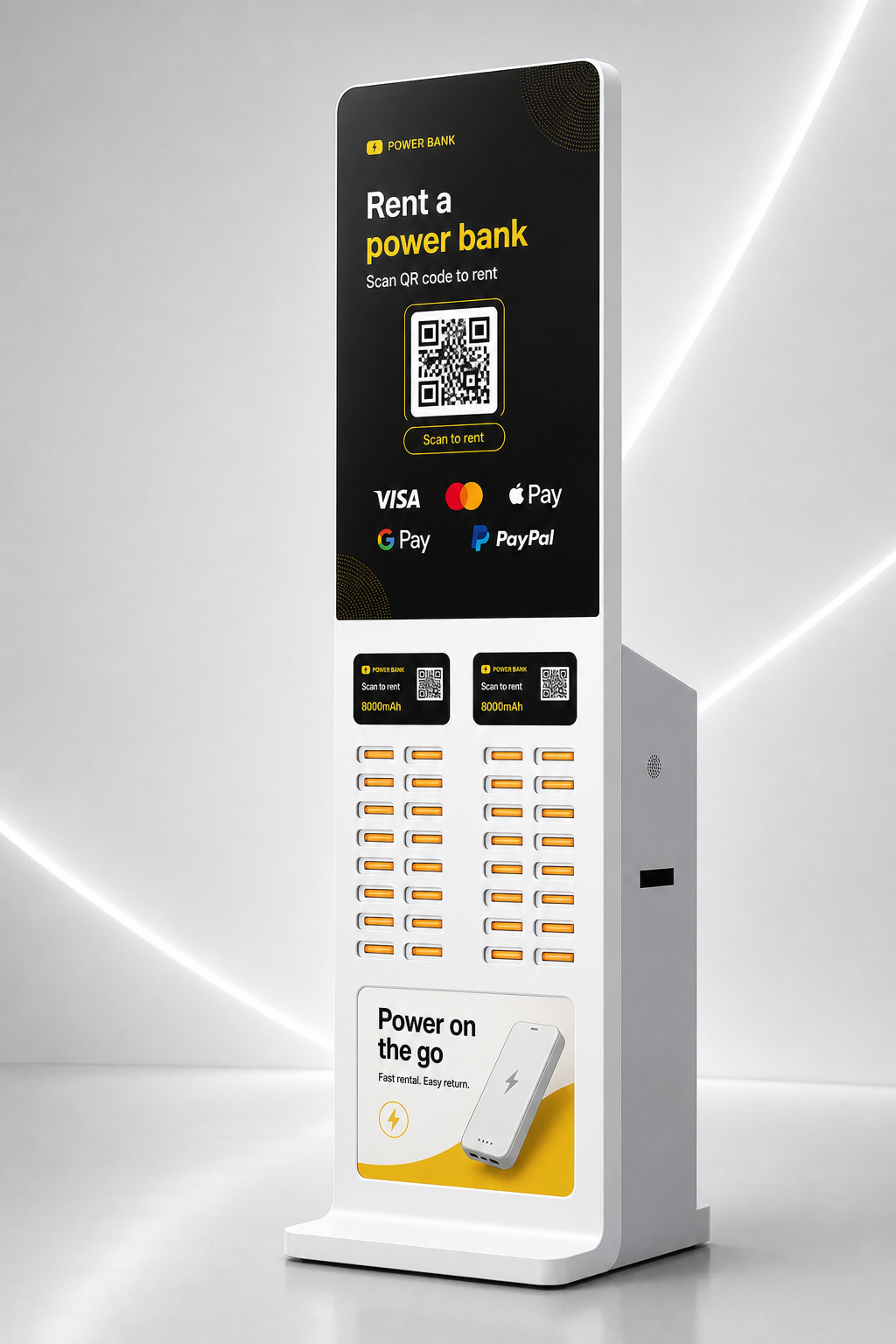
Many overseas buyers first compare shared power bank stations by price and slot count. That is understandable, but it is not enough for a rental business. A good device decision should match venue type, payment flow, SaaS compatibility, branding plan and delivery evidence.
For custom branding and model planning, review the OEM/ODM customization page. For venue-based hardware decisions, see why hardware should be selected by venue, not only slot count.
Match the station to the venue
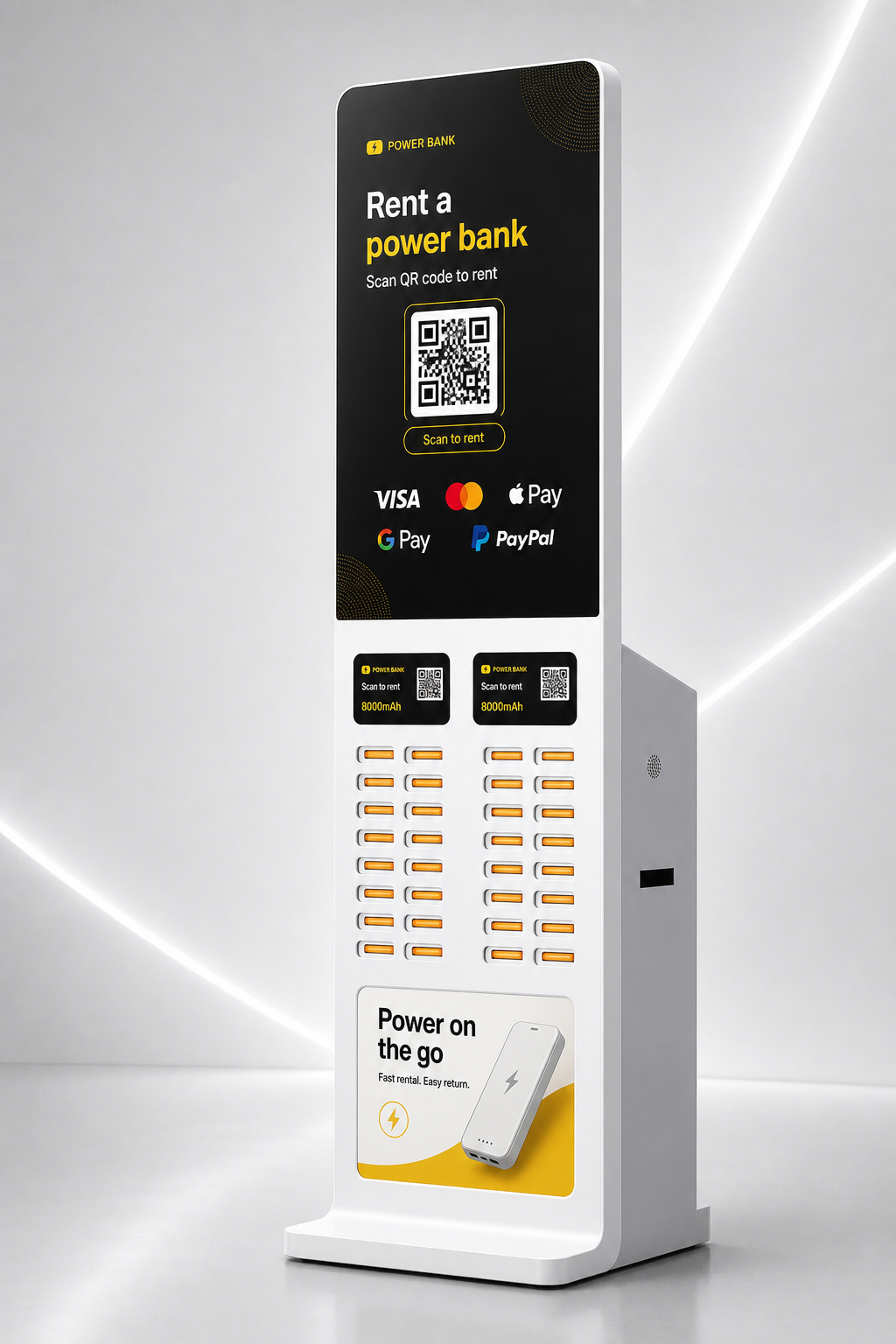
A small cafe, hotel desk, bar counter, shopping center and transport hub do not need the same station. Buyers should map the first venue list before choosing 6-slot, 8-slot, 12-slot, 24-slot, 36-slot or larger formats.
The first batch can be mixed. This allows the operator to test different venue patterns before committing to a larger order.
Check SaaS and firmware compatibility
Hardware is not isolated from the software platform. Before purchase, confirm whether the station can connect to the SaaS backend, report device status, release power banks reliably, handle abnormal returns and support the payment flow required by the target market.
If the team plans its own brand later, confirm whether device ID, QR label, cabinet color, screen content and H5/App branding can be upgraded without losing the original operating data.
Request evidence, not only catalog images
For B2B procurement, ask for:
- Product parameters and model list.
- Compliance and battery shipping files.
- Factory production and quality control photos.
- Packaging and carton proof.
- Sample shipment or batch shipment records.
- SaaS compatibility and dashboard screenshots.
These materials help a buyer judge whether the supplier can support both hardware delivery and long-term operation.
For battery shipment preparation, buyers can review public guidance such as IATA lithium battery shipping resources and ICAO dangerous goods information, then confirm shipment requirements with their freight forwarder.
Keep the first order testable
Instead of buying a large stock immediately, consider a pilot quantity tied to specific venue assumptions. The first order should help answer whether users rent, whether merchants support the station, whether payments work and whether the team can maintain devices.
FAQ
Should buyers choose only by slot count?
No. Slot count matters, but venue density, screen needs, branding, certification files, firmware and SaaS compatibility matter as well.
What documents should a buyer request?
Ask for model parameters, compliance documents, battery shipping files, factory photos, production test records, packing proof and shipment records.