Own the engineering stack
Plan for device protocol work, order-state design, payment callbacks, exception handling, observability, security, deployment and long-term support ownership.
A build-versus-buy decision should compare the complete production operating chain, not only an interface prototype: device integration, rental and return states, payment evidence, exception handling, dashboards, support ownership, observability and migration boundaries.
Review the role-based software function list for renter and operator channels, role boundaries and delivery dependencies, or open the Developer Center for the public hardware integration contract.
For B2B operators, agents, distributors and local brand teams. Not for personal power bank purchase.
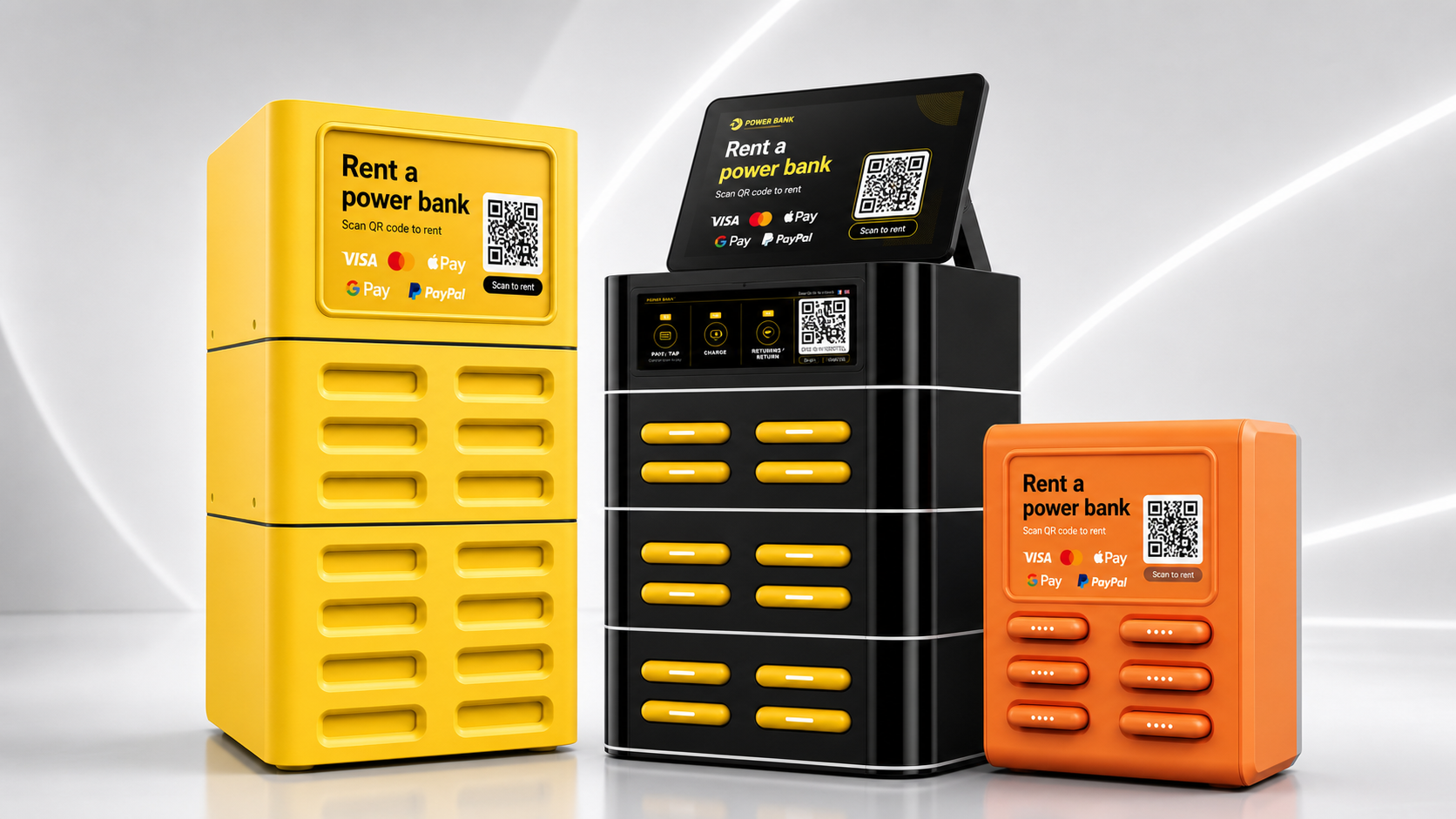
Build may suit teams that own the device protocol, payment integrations and long-term engineering operations. Buy may suit teams prioritizing a controlled pilot and established operating modules. A hybrid plan can keep branded experiences or selected integrations while using a managed device and order core. No universal cost or delivery-time claim is made here.
Plan for device protocol work, order-state design, payment callbacks, exception handling, observability, security, deployment and long-term support ownership.
Evaluate the existing device, rental, order, dashboard and support modules against your required workflow, evidence fields and customization boundaries.
Retain a branded renter experience or selected integrations while using a managed device, order or operator core with documented API and migration boundaries.
Plan station configuration, renter flows, order support, merchant access and operating reports around a controlled launch scope.
Define agent, merchant and support roles before assigning devices, venues or settlement reports to local teams.
Review renter UI, station labels, compatible hardware and a later private-deployment scope without assuming every feature is included in the first pilot.
Device managementReview station connectivity, slot availability, power-bank status and offline alerts across assigned venues.
Orders and supportFollow authorization, unlock, active rental, return and exception states with the device context needed for support.
H5 or App pathsUse a mobile browser route, a native App path or a reviewed hybrid model based on the operator's market and support plan.
Payment planningPrepare provider integration, authorization, settlement and refund-support requirements without implying provider approval.
Merchant and agent rolesPlan account boundaries for operator, agent, merchant and support users around their responsibilities.
ReportingReview order, device and merchant fields that help operators compare venues and identify support workload.
Start with an agreed station and software scope, then review venue operations and support workload before broader expansion.
Renter UI, station labels, packaging and selected operator-facing assets can be reviewed against hardware and rollout requirements.
A private-deployment discussion can follow once service boundaries, integrations, operating ownership and maintenance expectations are clear.
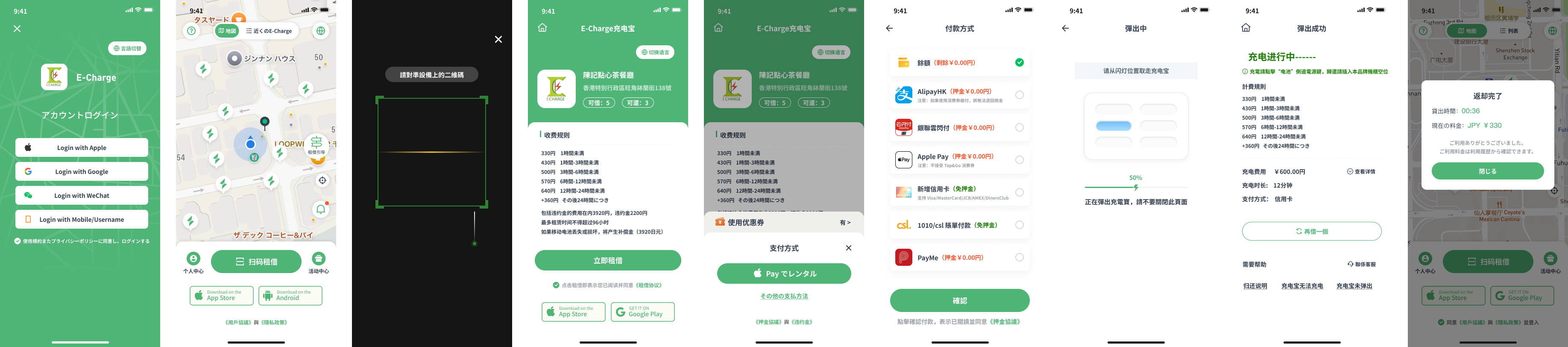
Visible route patterns can demonstrate browser-based scan-to-rent structure. Public links do not establish a customer, partner or provider relationship.
Review the H5 platform specification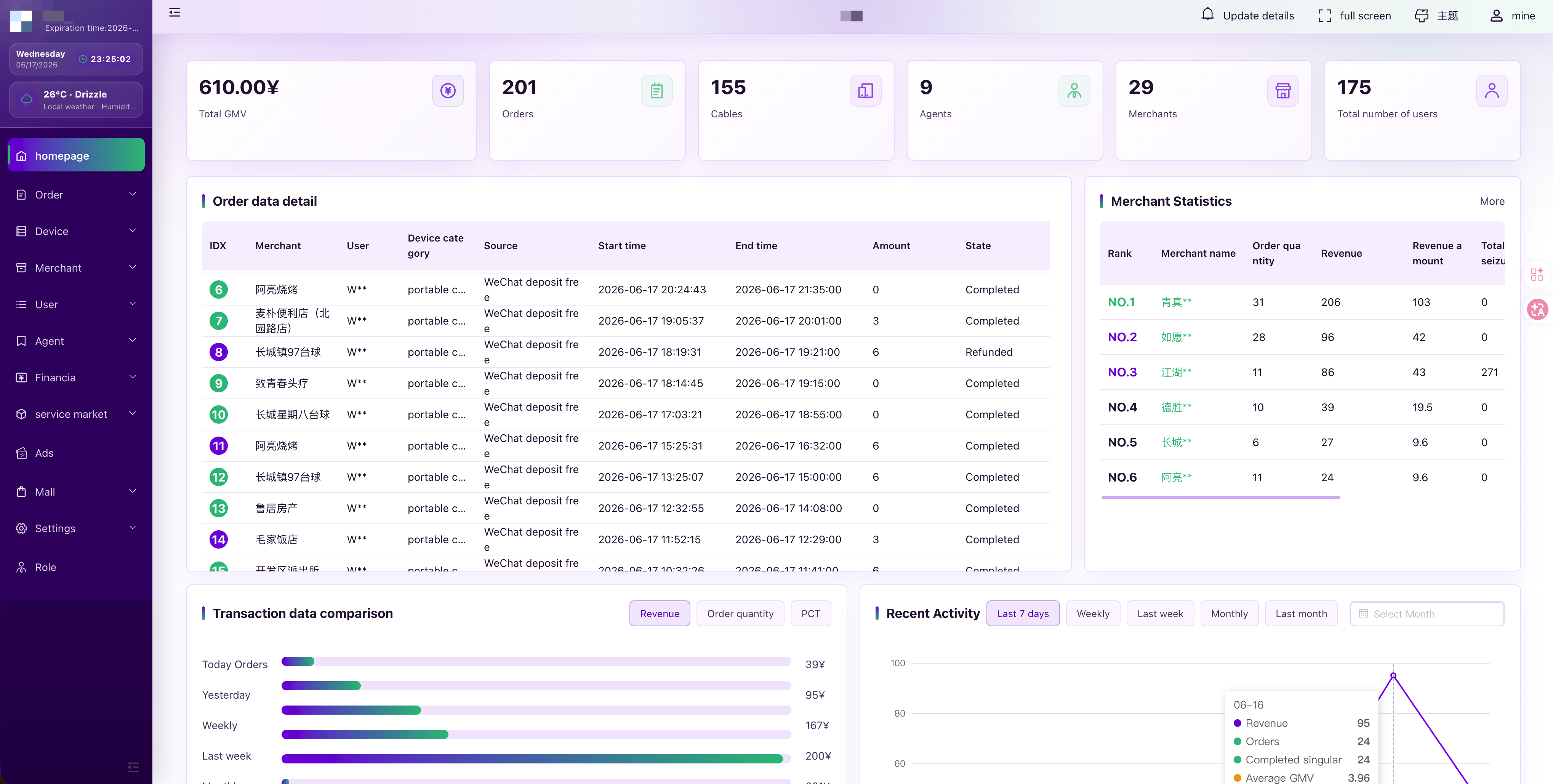
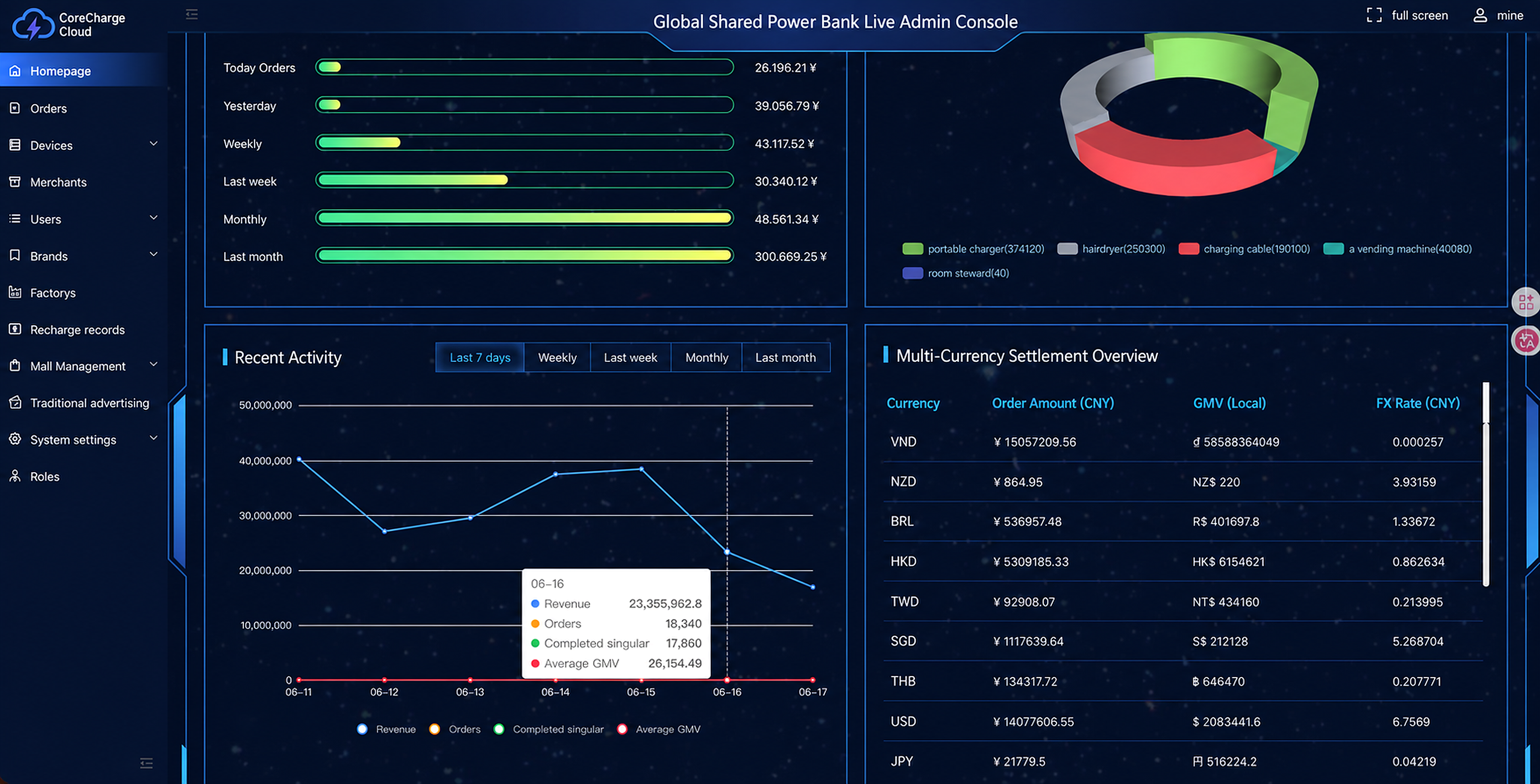
The interface demonstrates the types of device, order, merchant and reporting fields an operator may review. Example values are not performance claims.
Review the role-based software function list| Observable route | What it can prove | What it does not prove |
|---|---|---|
| Public H5 route | A browser-based map or scan-to-rent entry is publicly reachable. | No customer, partner, provider or delivery relationship is asserted. |
| Public App Store listing | A native iOS distribution route is publicly listed. | It is not a CoreCharge download, review, customer or ownership claim. |
| Public Google Play listing | A native Android distribution route is publicly listed. | It is not a CoreCharge download, rating, customer or partnership claim. |
Target marketCountry, city, venue mix, renter languages and the local team responsible for operations.
HardwareStation format, protocol, slot count, branding depth, sample review and expected delivery sequence.
Rental modelH5, App or hybrid path; pricing; authorization; return; support and refund-review rules.
Operating rolesOperator, agent, merchant and support responsibilities, plus the reports each role needs.
Payment providerProvider choice, onboarding status, supported integration route and unresolved approval dependencies.
Deployment pathControlled pilot, own-brand preparation or a separately reviewed private-deployment scope.
It is for shared power bank operators, agents, distributors and local brand teams preparing a rental network. It is not a consumer power bank storefront.
A controlled SaaS pilot can be used to validate venues, devices and support workflow before an own-brand or private-deployment scope is reviewed.
No. CoreCharge Cloud can prepare the integration and operating workflow, but provider onboarding, approval and live payment availability depend on the selected market, provider and project.
Compatible station formats can be reviewed by protocol, slot count, QR identity and deployment need. Compatibility is confirmed before a project scope is agreed.
Yes. A controlled pilot can connect a limited station group, selected venues, renter flow and support process so the operator can review real operating records before deciding whether to expand. A pilot does not guarantee commercial success.
The planned scope can include device management, QR rental entry, H5 or App flow, pricing rules, orders, return and refund-support states, merchant and agent roles, alerts and operating reports. Exact functions depend on the agreed deployment.
H5 can reduce download friction for an initial scan-to-rent pilot. A native App may be reviewed when the operator needs a stronger branded account experience or repeated-user functions. The choice should follow the market, support and payment plan.
There is no universal quantity. The pilot should be large enough to compare more than one venue type while remaining manageable for replenishment, returns and support. CoreCharge Cloud reviews quantity against venue access and the operator's team.
Authorization, deposit, charging and refund-support states are configured around the selected provider and rental policy. Provider approval, settlement timing and refund outcome remain subject to the provider and the operator's published rules.
Depending on the agreed scope, operator users can review station connectivity, slot and power-bank status, orders, return states, exception records, merchants, agents and offline alerts. Example dashboard values are interface demonstrations, not performance claims.
Agent and merchant roles can be planned with separate account permissions, assigned devices and relevant reports. The final hierarchy, settlement responsibilities and data access must be confirmed for the operator's business model.
Selected H5 or App copy, station labels, packaging and operator-facing assets can be reviewed for an own-brand launch. White-label depth depends on hardware, software, language and deployment scope and is not assumed by default.
Review station availability, completed and exception orders, return behavior, support workload, venue participation and payment issues together. Expansion should follow repeatable operations and venue evidence, not a single headline metric.
Map stations, devices, orders, payment/refund states, merchants, venues and support records to assigned roles.
Open the dashboard field guideTest scan, authorization, callback, unlock, return, fee-stop, refund-support and abnormal-order paths with redacted evidence.
Review H5 payment, unlock, return and refund UAT evidenceCompare 4, 6, 8, 12, 16 and 24-slot rental stations using peak demand, return-space reserve and service cadence.
Open the slot selection guideSend the target market, expected station quantity, venue model, payment-provider path and preferred H5 or App route. We will identify the software, hardware and integration questions for a controlled launch.
Last reviewed: 18 July 2026.