
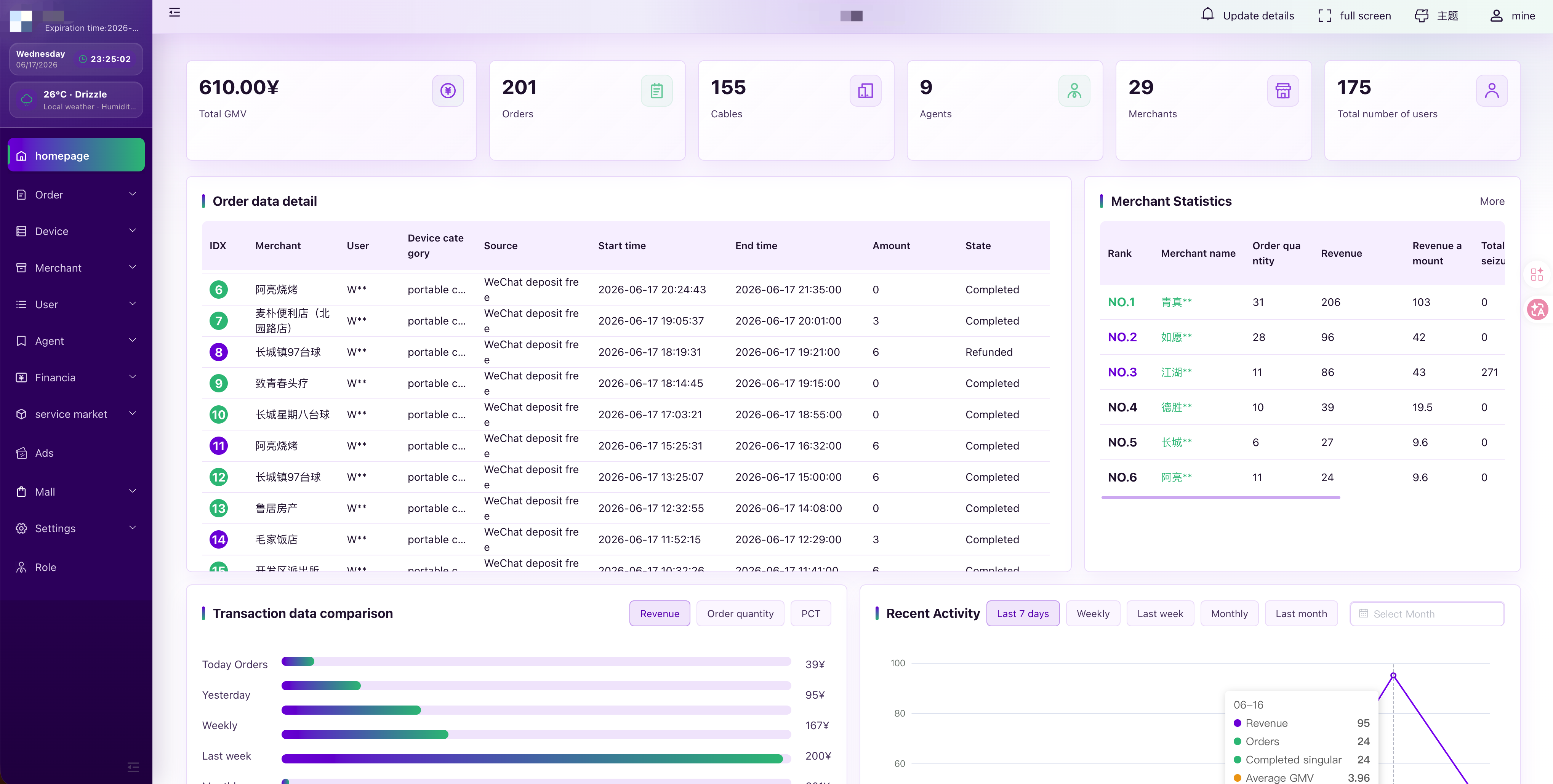
A shared power bank business is not only a cabinet purchase. Once stations are placed in venues, the operator needs software that can show what is happening: which devices are online, which orders are active, where refunds need review and which merchants or agents need follow-up.
This guide is for operators, agents and distributors comparing power bank rental software before they choose a pilot package. For a market-entry example, start with the Singapore landing page.
Where CoreCharge Cloud fits
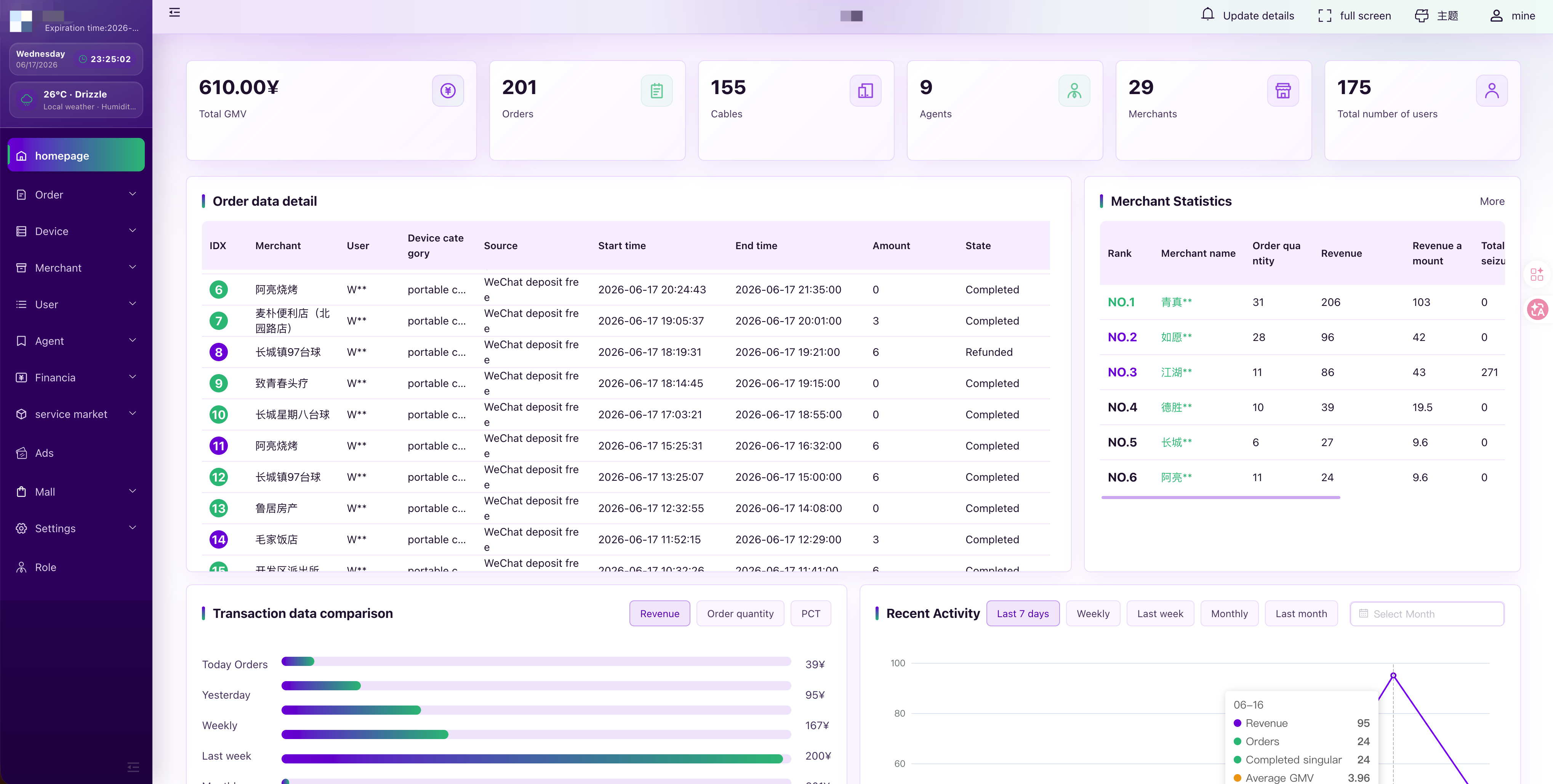
CoreCharge Cloud is the operating layer around a shared power bank rental network: it connects stations, QR rental pages, order records, device status, merchant or agent permissions and payment/refund review. It is not meant to be evaluated as a generic admin theme or a one-off hardware catalogue.
For a buyer-facing product specification, review CoreCharge Cloud shared power bank rental software for overseas operators.
The useful question for a buyer is whether the software can support the actual first launch: selected station formats, H5 or app entry, payment provider workflow, venue support ownership and the reports needed after devices are placed.
Follow the software decision into verifiable operating details
This article supports the software comparison. Use the canonical specification and field guides below for the next decision:
- Review the role-based software function list for buyer outcomes, roles, evidence states and deployment dependencies.
- Check the overseas shared power bank rental software specification for the system scope and pilot inputs.
- Compare 4, 6, 8, 12, 16 and 24-slot station capacity against venue demand and service cadence.
- Validate the H5 payment, return and refund UAT flow with traceable test fields and exception states.
- Review agent dashboard, order and reconciliation fields before defining operator roles.
- Use the canonical UAE market guide as a country-scoped launch-planning example; provider and local requirements still require verification.
Device management
Device management should show station status, slot availability, battery availability, offline warnings and abnormal device behavior. A buyer should ask whether the SaaS can support the station formats planned for the pilot, not only whether a demo screen looks complete.
The operator also needs a process for station replacement, fault handling and venue communication. If the team cannot see device status quickly, support becomes manual.
Order and rental flow records
Order management should connect the user rental action with the station, device, time, payment method, return status and support notes. This is essential for customer service and for judging whether a venue is worth expanding.
The H5 vs app rental flow guide explains why rental screens and dashboard records should stay consistent.
Payments, deposits and refunds
Payment records should be visible enough for support review. Operators need to know whether a payment was authorized, whether a deposit was used, whether a refund was triggered and whether an abnormal order needs manual review.
Payment approval and provider setup are market-specific. Public resources such as Stripe payment method documentation, the Monetary Authority of Singapore SGQR page and local payment-network pages can help operators prepare questions, but final setup depends on provider review.
Merchant and agent roles
As the network grows, the SaaS should separate operator, agent and merchant access. Agents may need station and merchant reports; venues may need limited order or support visibility; the platform owner needs broader configuration and settlement review.
Read the agent and merchant roles guide before launching a 50+ station agent model.
Reports and operating decisions
Useful reports are not vanity charts. They should help the operator decide:
- Which venue categories are active.
- Which stations are offline or underused.
- Which payment or refund issues repeat.
- Which merchant or agent needs training.
- Whether the pilot should expand, pause or change station format.
For first-batch planning, pair this software checklist with the shared power bank business starter guide.
What to ask before buying
Before requesting a quote, ask how the SaaS supports your target city, estimated station quantity, payment methods, H5/App flow, agent roles, merchant reports and support process. The answer should sound like an operating plan, not only a hardware list. Use the shared power bank dashboard field and reconciliation guide to check source events, freshness, role boundaries and exception actions.
What software cannot solve alone
Software does not replace local payment approval, venue agreements, device logistics, renter support policy or compliance review. CoreCharge Cloud can help structure the SaaS workflow and launch questions, but the buyer still needs local operating ownership.
FAQ
What is the most important software feature for a shared power bank operator?
Device status, order visibility, payment/refund records, merchant or agent reporting and support workflow are usually more important than cosmetic screens during the first pilot.
Can hardware work without a serious SaaS dashboard?
Hardware can be placed, but daily operations become harder if the dashboard cannot show status, orders, refunds, offline alerts and merchant or agent performance.